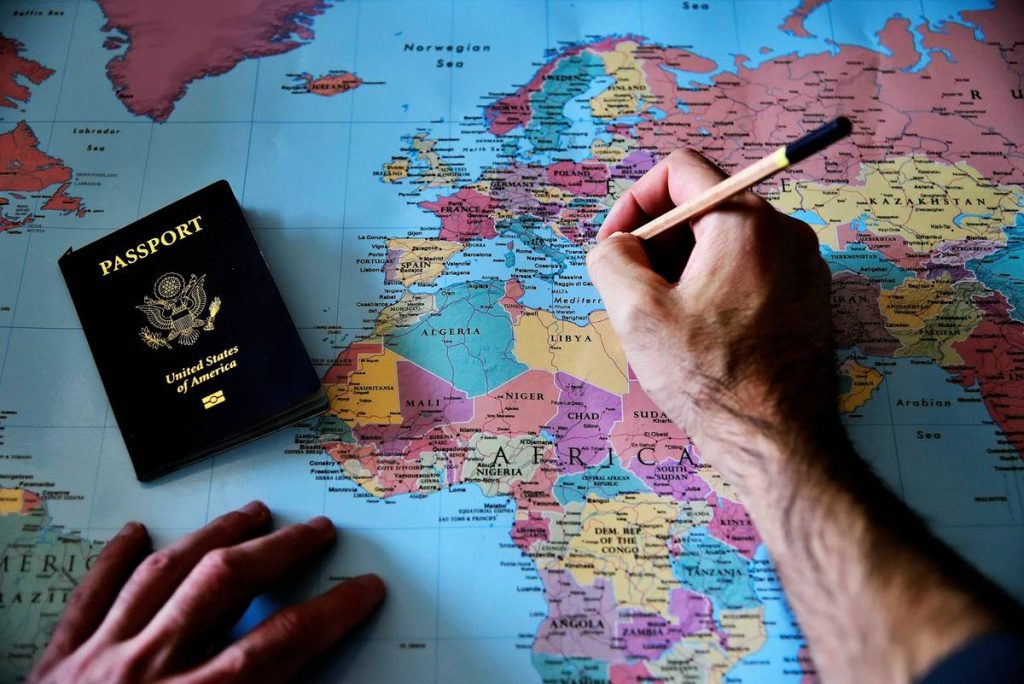
Ever stood frozen in a Madrid café, menu in hand, knowing *“quiero”* means “I want” — but blanking on *“un café con leche, por favor”*? I did. Last spring in Granada, I confidently ordered “una cerveza fría”… only to receive a lukewarm lager because I’d mispronounced *fría* so badly the server assumed I meant *fria* (a nonexistent word) and defaulted to room temperature. That tiny slip cost me 20 minutes of awkward charades — and taught me a brutal truth: textbook fluency crumbles at the border. This isn’t about grammar drills or flashcard marathons. It’s about travel techniques for learning languages — real-world, low-friction strategies that turn every train station, market stall, and hostel dorm into your personal language lab.
Table of Contents
- Why Travel Techniques for Learning Languages Are Non-Negotiable in Online Education
- Your Step-by-Step Field Guide (Even Before You Book the Flight)
- 6 Practical Tips That Actually Stick
- From Awkward to Authenticated: A Real Traveler’s Results
- FAQs: Your Language Questions, Answered Honestly
Why Travel Techniques for Learning Languages Are Non-Negotiable in Online Education
Online language platforms often prioritize structure over spontaneity — verb conjugations before ordering coffee, vocabulary lists before reading a metro sign. But research from the National Institute of Child Health and Human Development (NICHD) confirms what travelers know instinctively: memory hardens fastest when tied to sensory experience — the smell of churros, the clatter of a Barcelona tram, the warmth of a stranger’s smile after you fumble a greeting. Without context, online lessons risk becoming abstract performance art. And that’s where most digital Spanish courses for travelers fail: they treat language as static data, not dynamic behavior.

The gap isn’t competence — it’s calibration. You might know 300 Spanish words, but if none trigger instantly when a shopkeeper says *“¿En qué le puedo ayudar?”*, you’re stuck. That’s why modern online education must embed travel techniques for learning languages at its core — not as add-ons, but as foundational design principles.
Your Step-by-Step Field Guide (Even Before You Book the Flight)
1. Map Your Micro-Moments First
Don’t start with “learn Spanish.” Start with your itinerary. Identify 3–5 high-frequency, low-risk interactions: ordering breakfast, asking directions to a landmark, buying transit tickets. Build mini-dialogues around those — *exactly* what you’ll need, no more, no less.
2. Record Native Audio — Then Shadow It Daily
Use free tools like Forvo or YouTube to find authentic clips of “¿Dónde está la estación de metro más cercana?” Speak it aloud *immediately* after the native speaker. Mimic rhythm, pitch, and mouth shape — not just words. Do this for 4 minutes each morning. Consistency beats duration.
3. Pre-Load “Rescue Phrases” in Your Pocket
Write 3 short, printable cards: “I don’t understand, please speak slower,” “How do you say ___ in Spanish?,” and “Thank you — that helped so much!” Keep them folded in your wallet. These aren’t failures — they’re social lubricants that keep conversations flowing.
6 Practical Tips That Actually Stick
- Stop translating in your head. Train your brain to associate “agua” directly with the sensation of thirst — not with the English word “water.” Try this: snap a photo of your water bottle, label it
aguain your phone, and glance at it daily. - Use the “One-Thing Rule” in conversation. Pick *one* new word or phrase per interaction — e.g., “¿Cuánto cuesta?” — and use it three times before adding another. Overloading kills confidence.
- Ditch perfect pronunciation — aim for clarity instead. A strong “r” in “perro” matters less than clear vowel sounds. According to linguists at the Linguistic Society of America, intelligibility depends more on vowel quality and syllable stress than consonant precision.
- Keep a “Win Log.” Jot down one small victory daily: *“Understood bus announcement,” “Asked for extra napkins correctly.”* Not “spoke Spanish.” Specific wins rewire your brain’s reward system.
- Swap “study time” for “interaction time.” Spend 15 minutes finding a local bakery’s Instagram and commenting “¡Qué delicioso! ¿Tienen tortilla de patatas?” — even if you don’t get a reply. Authentic exposure > passive grammar review.
- Embrace the groan-worthy “terrible tip.” Don’t memorize 50 food vocabulary words before your trip. You’ll forget half and panic when faced with a dish called *croquetas de jamón ibérico*. Learn *“What’s in this?”* (¿Qué lleva esto?) instead — and let curiosity drive your learning.
From Awkward to Authenticated: A Real Traveler’s Results
Maria, a teacher from Helsinki, used these travel techniques for learning languages on her first solo trip to Valencia. She focused solely on transport and food needs, shadowed 3 audio clips daily, and kept her Win Log in Notes. After 12 days, she conducted a full grocery run unassisted — including negotiating price for artichokes. Her follow-up self-assessment showed a 40% increase in spontaneous sentence formation vs. her pre-trip online course results (based on CEFR self-rating benchmarks). More importantly: she laughed when mispronouncing *“aceitunas”* — and got a free olive sample for trying.
FAQs: Your Language Questions, Answered Honestly
How soon before my trip should I start using travel techniques for learning languages?
Start at least 3 weeks out — but even 5 days helps if you focus only on survival phrases. The goal is neural familiarity, not mastery.
Are apps like Duolingo useless for travelers?
No — but they’re scaffolding, not the whole building. Use them for vocabulary and basic grammar, then immediately apply it with shadowing, recording yourself, or chatting via HelloTalk. Think of apps as your workbook; real interaction is your exam.
What if I’m shy or fear embarrassment?
Your first five interactions will feel exposed. That’s normal. Locals overwhelmingly appreciate effort — not perfection. In Spain, saying *“Hablo poco español, pero lo intento”* (“I speak little Spanish, but I’m trying”) often opens warmer doors than flawless grammar.
Do these techniques work for non-Latin script languages like Japanese or Arabic?
Absolutely — but prioritize sound and gesture first. Scripts can wait until you’ve built speaking confidence. A nod, pointing, and repeating a phonetic phrase works globally.
Can children benefit from travel techniques for learning languages too?
Yes — especially through games, songs, and simple repetition. Kids absorb tone and rhythm faster than adults. Involve them in choosing “rescue phrases” and reward their wins visibly.
Is it okay to mix languages (like Spanglish) while traveling?
Yes — if it gets you understood. Code-switching is natural in multilingual communities and often builds rapport. Just avoid relying on it exclusively; keep stretching toward target language phrases.
Language isn’t about being flawless — it’s about being present. Every stumble is a bridge being built, one imperfect word at a time. We’ve helped hundreds of travelers shift from anxious spectators to engaged participants in foreign cultures — starting right where they are. If you’d like personalized tips tailored to your next destination — or help designing a lightweight travel-language plan — we’re here for it. Contact Us today.
Curious how our philosophy takes shape in practice? Learn more about our teaching ethos and team on our About Us page — and rest assured your data stays private; all our practices align fully with our Privacy Policy.
Words spoken are wings — not weights.