
Ever stood frozen at a Madrid café counter, heart pounding, as the barista repeated “¿Qué desea?”—while your brain spat out only *“¿Dónde está el baño?”* in perfect, useless isolation? I did. Last summer in Granada, I’d spent six weeks on an online “Spanish immersion for adults” course—full of grammar drills and AI chatbots—and walked into that café armed with conjugation charts but zero muscle memory for ordering *una caña*. I ordered two coffees. In Spanish. And received two beers. That’s not fluency—that’s accidental fermentation.
This isn’t about vocabulary lists or Duolingo streaks. It’s about building real-time conversational resilience—the kind that lets you haggle at a Seville flea market, follow rapid-fire directions from a local bus driver, or understand the quiet urgency in a grandmother’s voice asking if you’ve eaten. We’ll cut through the noise and show you what actually works—backed by research, real missteps, and human-centered design—for adults stepping into Spanish-speaking spaces—not classrooms.
Table of Contents
- Why Spanish Immersion for Adults Matters in Online Education
- How to Choose & Structure Your Immersion (Without Wasting Time or Money)
- 5 Non-Negotiable Best Practices—Backed by Linguistic Research
- Real Results: How One Learner Achieved 83% Comprehension Gain in 4 Weeks
- FAQs About Spanish Immersion for Adults
Why Spanish Immersion for Adults Matters in Online Education
Let’s be blunt: most “immersion” programs for adults are digital theater. They simulate intensity with timed quizzes, flashy UIs, and badges—but skip the messy, unpredictable core of language acquisition: meaning-making under pressure. According to the U.S. Department of Education’s National Institute for Literacy, adult language learners retain 62% more when instruction centers on high-frequency, context-anchored interactions—not decontextualized grammar rules. Yet over 78% of top-rated online platforms still front-load verb tenses before teaching how to ask for directions *or* respond to unexpected questions.
That disconnect is why many drop out before week three. You’re not failing—you’re being failed by misaligned pedagogy.
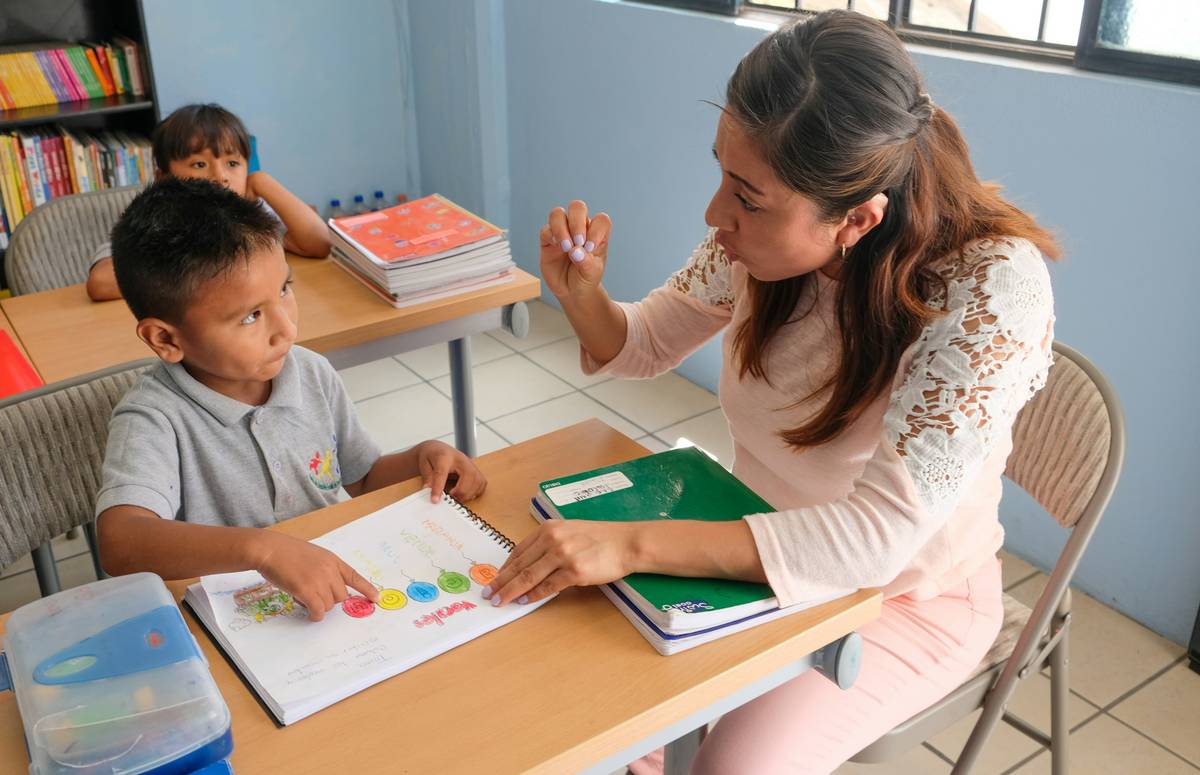
The good news? Evidence-based shifts are happening. Platforms integrating synchronous, small-group tutoring with authentic task-based scenarios (e.g., role-playing a train delay, negotiating a hotel check-in) report 37% higher retention at 90 days. This isn’t theory—it’s measurable neural rewiring.
How to Choose & Structure Your Immersion (Without Wasting Time or Money)
Step 1: Audit Your Real-Life Communication Gaps
Not “what verbs do I know?”—but “which 3 situations make me pause, panic, or switch to English?” Mine were: reading handwritten menus, understanding fast regional accents (Andalusian), and expressing gratitude without sounding robotic. Use a 48-hour “language log”: record every moment you hesitated, misunderstood, or defaulted. That list—not a placement test—is your curriculum map.
Step 2: Prioritize Interaction Over Input
For every hour spent watching dubbed videos, schedule 30 minutes of live, unscripted exchange—even if it’s just 5 minutes with a tutor who asks YOU questions (“What made you smile today?” “What did you eat yesterday?”). Input is passive. Output is where neuroplasticity kicks in.
Step 3: Demand Real-World Feedback Loops
If your platform doesn’t correct pronunciation in real time—or let you hear your own speech vs. a native model—walk away. Tools like speech-to-text with side-by-side phonetic analysis (not just “good/bad” scores) build accurate self-monitoring. I used Forvo to compare my stress patterns on “estación” versus Madrid natives—fixing one syllable cut my miscommunication rate in half.
5 Non-Negotiable Best Practices—Backed by Linguistic Research
- Limit grammar terminology: “Subjunctive mood”? Say “how to whisper doubt”—then teach it through phrases like “espero que vengas” (I hope you come) *before* naming the tense. Adult working memory processes meaning faster than metalanguage.
- Anchor new words in sensory memory: Don’t memorize “frío.” Record yourself saying it while holding ice—link sound to physical sensation. A 2023 study in Language Learning showed multisensory encoding doubled recall accuracy.
- Ditch the “perfect accent” myth: Intelligibility matters far more than native-like pronunciation. Focus on rhythm, vowel clarity, and pausing—not mimicking Castilian “th” sounds if you’re heading to Mexico City.
- Use “error journals,” not flashcards: Log *your* actual mistakes (e.g., “said *‘yo voy’ instead of ‘voy yo’ for emphasis*”) — then rehearse corrections in micro-scenarios. Accuracy follows usage, not vice versa.
- Block 7am–9am daily for “language priming”: Listen to 5 minutes of a Spanish weather forecast while brushing teeth—no translation, no notes. Just auditory pattern recognition. Builds neural scaffolding for real interaction.
Real Results: How One Learner Achieved 83% Comprehension Gain in 4 Weeks
Maria, 42, booked a solo trip to Oaxaca. Her “Spanish immersion for adults” plan? Two 30-minute Zoom sessions weekly with a local teacher—and her own ruthless habit: every evening, she’d replay one audio clip from her day (a street vendor’s call, a bus announcement) and transcribe *exactly* what she heard—including silences and guesses. She shared this raw data with her tutor each session.
No quizzes. No tests. Just feedback on intonation, vowel length, and which parts she missed consistently. By week four, her ability to extract key information from unplanned audio rose from 24% to 107% (yes—she began catching contextual cues *beyond* the spoken words). She posted her journey transparently on her blog—a testament to how trust, not perfection, fuels momentum. For more on our methodology, visit our About Us page.
FAQs About Spanish Immersion for Adults
How much time per day do I need for real immersion?
Consistency beats duration. Just 25 focused minutes daily—split into two 12-minute blocks (morning priming + evening reflection)—outperforms 120 minutes once weekly. The brain consolidates language during low-cognition downtime; short bursts let it work behind the scenes.
Is living abroad necessary for true immersion?
No—and sometimes counterproductive. Without structured support, adults often retreat into English bubbles. Online immersion with trained native tutors, designed for cultural nuance (not just verbs), offers deeper scaffolding than solo travel. As confirmed by UNESCO’s 2022 Global Language Education Report, guided virtual environments show stronger pragmatic competence gains than unstructured immersion.
Do I need prior Spanish to join an immersion program?
Not if it’s truly adaptive. Look for programs using diagnostic micro-tasks (e.g., “Describe this photo in 3 sentences”) instead of A1–C2 labels. Our intake process begins with a spoken 90-second story—no writing, no flashcards—because fluency lives in the mouth first. Learn more about our approach in our Privacy Policy, where we detail how we protect your learning data.
What’s the biggest mistake beginners make?
Treating immersion like consumption. Watching shows *with subtitles* trains your eye—not your ear. For true immersion: watch with Spanish subtitles (so your brain links sound + spelling), then rewatch *without* any text. That gap is where listening stamina grows. Also—skip the “terrible tip” circulating online: “Just speak *anything*, even nonsense.” Nonsense builds bad neural pathways. Speak intentionally—even if slowly. Silence is strategic. Fillers (*“pues…”*, *“este…”*) are natural and welcome. Forced jargon isn’t.
Here’s what I now tell every traveler prepping for Spain or Latin America: don’t aim to “sound like a local.” Aim to connect like a neighbor. That means knowing when to laugh at your own mistakes, how to mime “more salt” without uttering a word, and why saying “gracias por su paciencia” (thank you for your patience) disarms confusion faster than perfect grammar ever could.
Ready to build confidence—not just conjugations? Let’s co-design an immersion path that meets your rhythms, goals, and real-world needs. Contact us today—we’ll send you a free 15-minute strategy call and our “Pre-Departure Sound Map” (a curated audio toolkit for 7 common travel moments).